Home / Blog / Junk Removal Cost in Loveland, CO: 2026 Price Guide
Junk Removal Cost in Loveland, CO: 2026 Price Guide
How much does junk removal cost in Loveland, CO? See 2026 national average prices by truckload size, what drives the price, and how to avoid overpaying.
How Junk Removal Pricing Actually Works
If you have a garage full of old furniture, a basement of boxes you have not opened since the last move, or a hot tub that stopped being fun about three summers ago, the first question on your mind is simple: what is this going to cost me? It is a fair question, and the answer is more straightforward than most people expect, because the junk removal industry mostly prices one way: by volume.
Nearly every full-service junk removal company in the country charges based on how much space your stuff takes up in their truck. The truck is the unit of measurement. A standard junk removal truck holds roughly 13 to 17 cubic yards, and the crew estimates how much of that space your items fill. One eighth of a truck, a quarter, half, three quarters, or a full load. Your price follows that fraction.
This matters because it means two neighbors with very different piles of junk can pay very different prices, and both can be fair. A single worn-out armchair is a minimum-load job. A garage packed with thirty years of accumulation is a full truckload. The crew shows up, looks at the pile, and gives you a written quote before anything gets loaded. That is how the industry is supposed to work, and in Loveland it is the standard you should expect.
Real talk: if a company cannot or will not give you a firm written price before they start loading, that is your cue to call someone else.
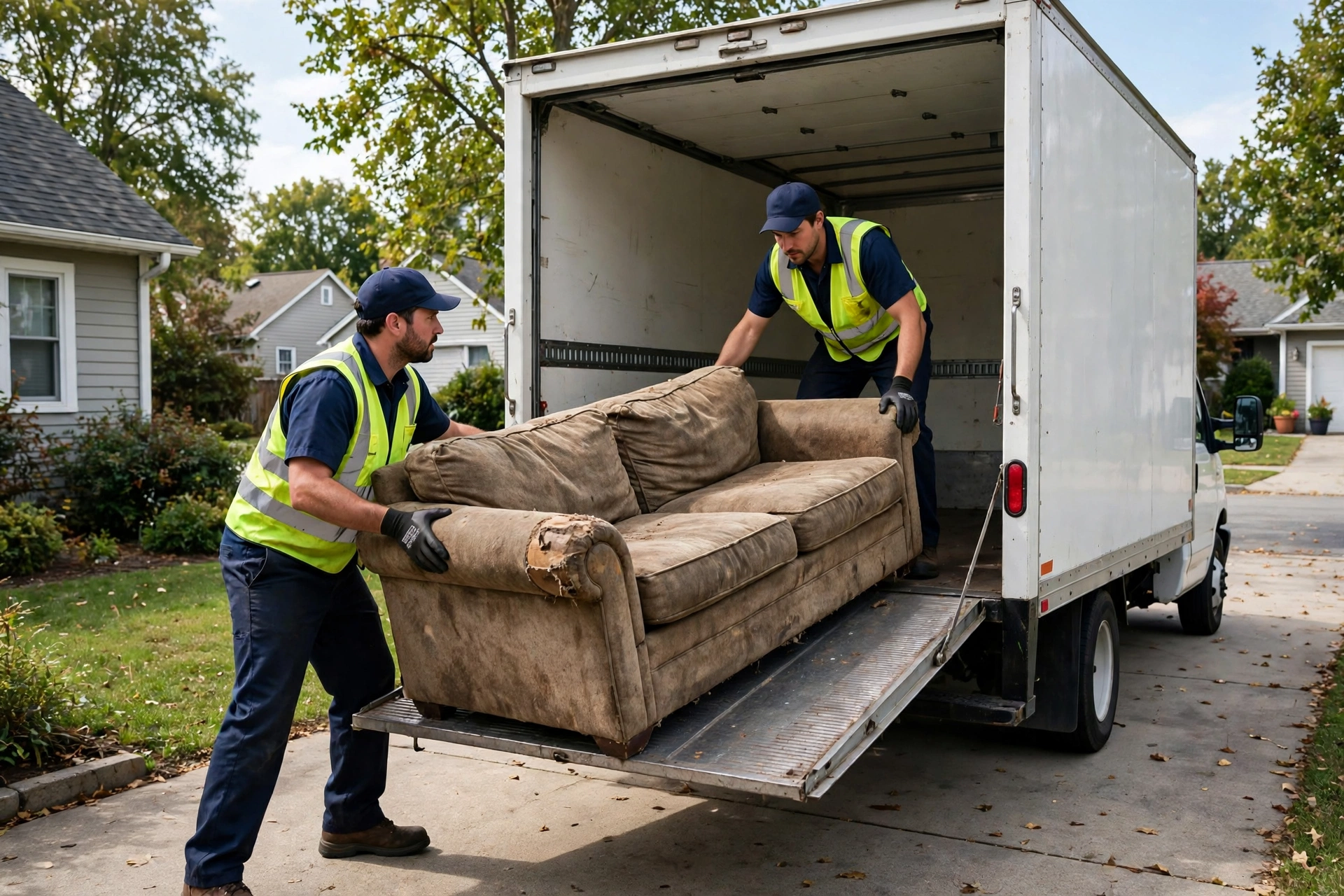
Average Junk Removal Prices by Truckload Size (2026 National Averages)
The prices below are national industry averages compiled from published cost guides, not quotes from any single company and not prices for Loveland specifically. Local prices move with labor costs, fuel, and what the local landfill charges, but these ranges are the ballpark the whole country works in.
| Load size | Rough volume | National average price range | What it looks like |
|---|---|---|---|
| Minimum / 1/8 truck | 2 to 3 cubic yards | $75 to $140 | A few bags, one armchair, a small pile |
| 1/4 truck | 3 to 5 cubic yards | $125 to $200 | A sofa and loveseat, or two refrigerators |
| 1/2 truck | 5 to 10 cubic yards | $200 to $400 | A garage cleanout, two or three rooms |
| 3/4 truck | 10 to 13 cubic yards | $400 to $600 | A large cleanout, heavy furniture sets |
| Full truckload | 13 to 17 cubic yards | $600 to $800 | Estate cleanout, whole-house clearout |
These tiers come from published pricing guides by Junksmiths, WeCycle, and Angi, which all describe the same volume-based model with slightly different ranges. Junksmiths puts the national average for a typical job at about $240, with single items starting near $60 and full truckloads topping $700. Angi reports a similar picture: a typical haul averages $246, with most projects landing between $137 and $368, a quarter truckload at $125 to $200 nationally, and a full truckload at $600 to $800. WeCycle's ranges run a little higher on the top end, up to $1,099 for a full truck, which shows how much the numbers can shift by market.
Notice how wide the ranges are. A quarter truck might be $125 or $200 depending on where you live and what is in it. That is not companies being shady. Volume is only the starting point. Everything else that goes into your price lives in the next section.
What Single Items Typically Cost to Remove
Sometimes you are not filling a truck. You just have one couch, one fridge, or one mattress that needs to go. National averages for common single items, again from published industry guides rather than any one company's menu:
| Item | National average range |
|---|---|
| Bulky furniture (sofa, sectional, dresser) | $80 to $400 per piece |
| Major appliances (fridge, washer, dryer) | $60 to $250 per piece |
| Mattress and box spring | $75 to $150 |
| Electronics (TVs, computers) | $20 to $200 |
| Carpeting | $75 to $300 |
| Construction debris | $100 to $800 |
The ranges are wide because the item is only part of the story. Hauling a mattress down three flights of stairs costs more than carrying it out of a ground-floor bedroom. A refrigerator that needs refrigerant recovered before disposal costs more than a dry one. The crew, the stairs, the weight, and the disposal fees all stack on top of the item itself.

What Actually Drives Your Price Up or Down
1. Volume is king
Volume decides the tier, and the tier decides most of the price. This is also why sorting matters so much. A garage cleanout where you have already donated the good stuff and bagged the trash might fill half a truck. The same garage untouched might fill three quarters. You do not need to be ruthless, but every cubic yard you eliminate before the crew arrives is money back.
2. Weight and material
Light and bulky is cheap per cubic yard. Heavy and dense is expensive. A truck full of old clothes and cardboard costs the crew very little to dump. A truck full of concrete, dirt, shingles, or tile gets expensive fast, because landfills charge by weight. Some companies price heavy materials as dedicated loads, separate from standard mixed junk. If your pile includes a lot of construction debris, expect the quote to reflect the dump fees. For context, the Larimer County landfill publishes per-item disposal fees, including $36 for an appliance containing refrigerant, $20 for one without, and $40 per mattress or box spring, and those fees land inside your quote somewhere.
3. Labor: stairs, distance, and disassembly
Two identical couches can cost different amounts to remove. One sits in a ground-floor living room twenty feet from the driveway. The other is in a third-floor apartment with no elevator, and the crew has to take the legs off to get it through the door. Labor is the quietest price driver in junk removal, and it is completely legitimate. When you book, mention stairs, long carries, narrow hallways, and anything that needs disassembly. A good company factors it into the written quote instead of surprising you with it.
4. Access and location
Curbside is the cheapest way to have junk picked up, because the crew does the least work. Items already at the curb or in the driveway cost less to remove than items the crew has to carry out of the house. Some companies even offer a discounted curbside rate. On the other end, hoarding cleanouts, estate cleanouts with multiple rooms, and jobs where the crew has to sort as they go all take more time and cost more.
5. Specialty items
Some items carry their own surcharges no matter the volume. Refrigerators and air conditioners contain refrigerants that must be recovered by a certified handler before disposal. Hot tubs and sheds need to be cut apart or disassembled. Pianos are heavy, awkward, and fragile all at once. Tires often carry separate disposal fees at local facilities. If your job includes any of these, ask about the surcharge when you book so it shows up in the written quote, not as a surprise at the curb.
6. Local disposal costs
Every junk removal company pays to dump what it hauls, and those fees vary by county. In Larimer County, the published landfill fee schedule includes per-item charges for appliances and mattresses, and weight-based fees for everything else. When disposal fees are higher, quotes are higher. This is one reason a national average is a starting point, not a promise.
Real talk: the cheapest quote is not always the cheapest job. A suspiciously low price that skips the written quote often grows once the truck is loaded and you have no leverage.
How Quotes Work (and What a Fair One Looks Like)
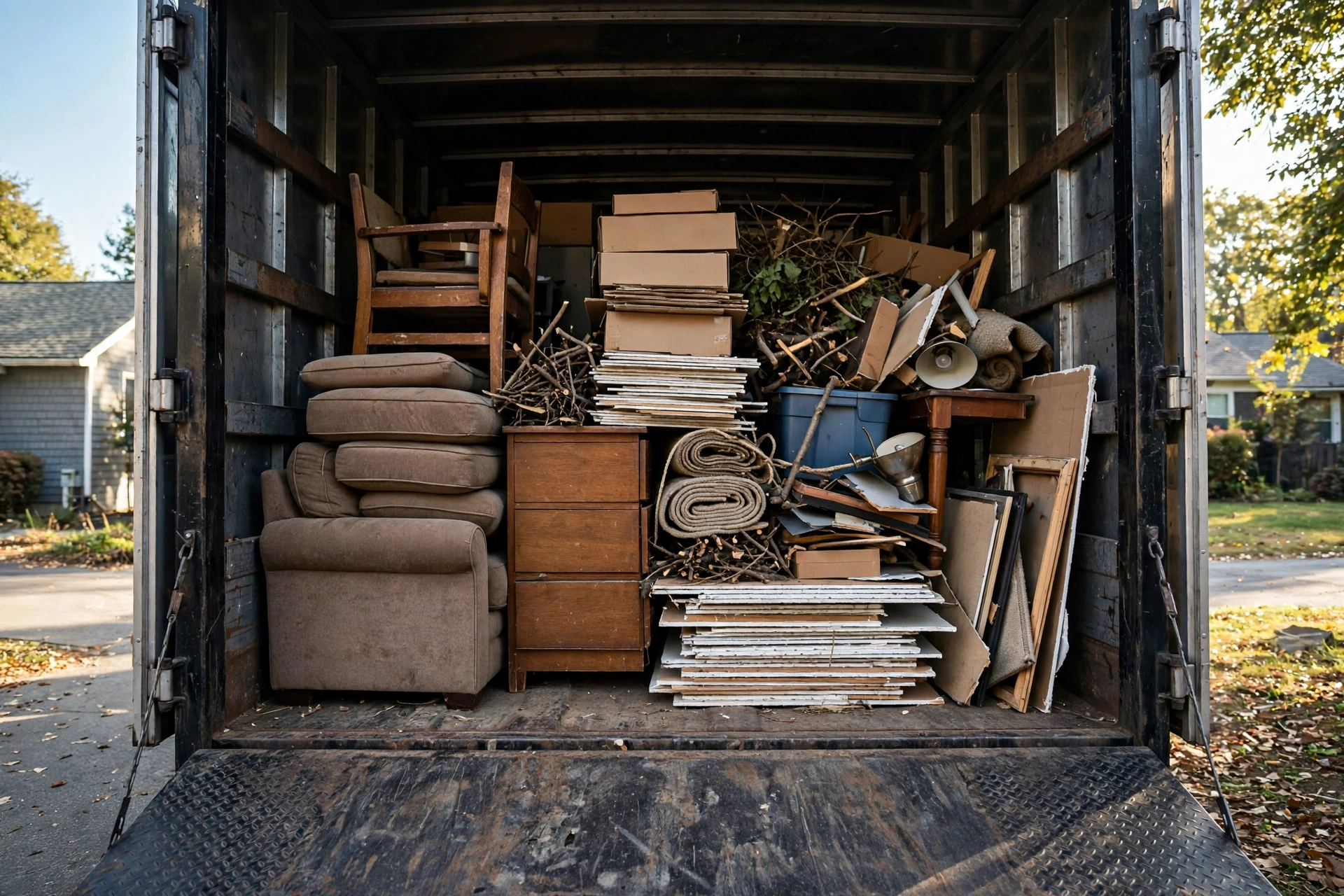
Here is the standard process at a reputable company. You call or book online and describe the job, sometimes with photos. The crew arrives, looks at the actual pile, and gives you a written price before anything is touched. You approve it, they load, they haul, and the price does not change. That written, approved-before-loading quote is the whole game. It is the industry's answer to the oldest trick in home services, which is quoting low and charging high.
A fair quote should include the labor, the hauling, and the disposal fees in one number. Ask these questions before you approve anything:
- Is this the total price, including disposal fees and any surcharges?
- Does the price change if the load ends up smaller or larger than estimated?
- Is there a surcharge for stairs, heavy items, or items like appliances with refrigerant?
- What happens to the items after pickup? Donation, recycling, and landfill are all legitimate answers, but you deserve an answer.
Red flags are consistent across the industry: no written quote, pressure to decide on the spot, a price quoted over the phone that the crew "recalculates" upward at your door, or a company that charges by the hour for junk removal. Hourly pricing is unusual in this business precisely because it rewards slow work. Volume pricing rewards fast work, which is what you want.
How to Avoid Overpaying
Sort before they arrive
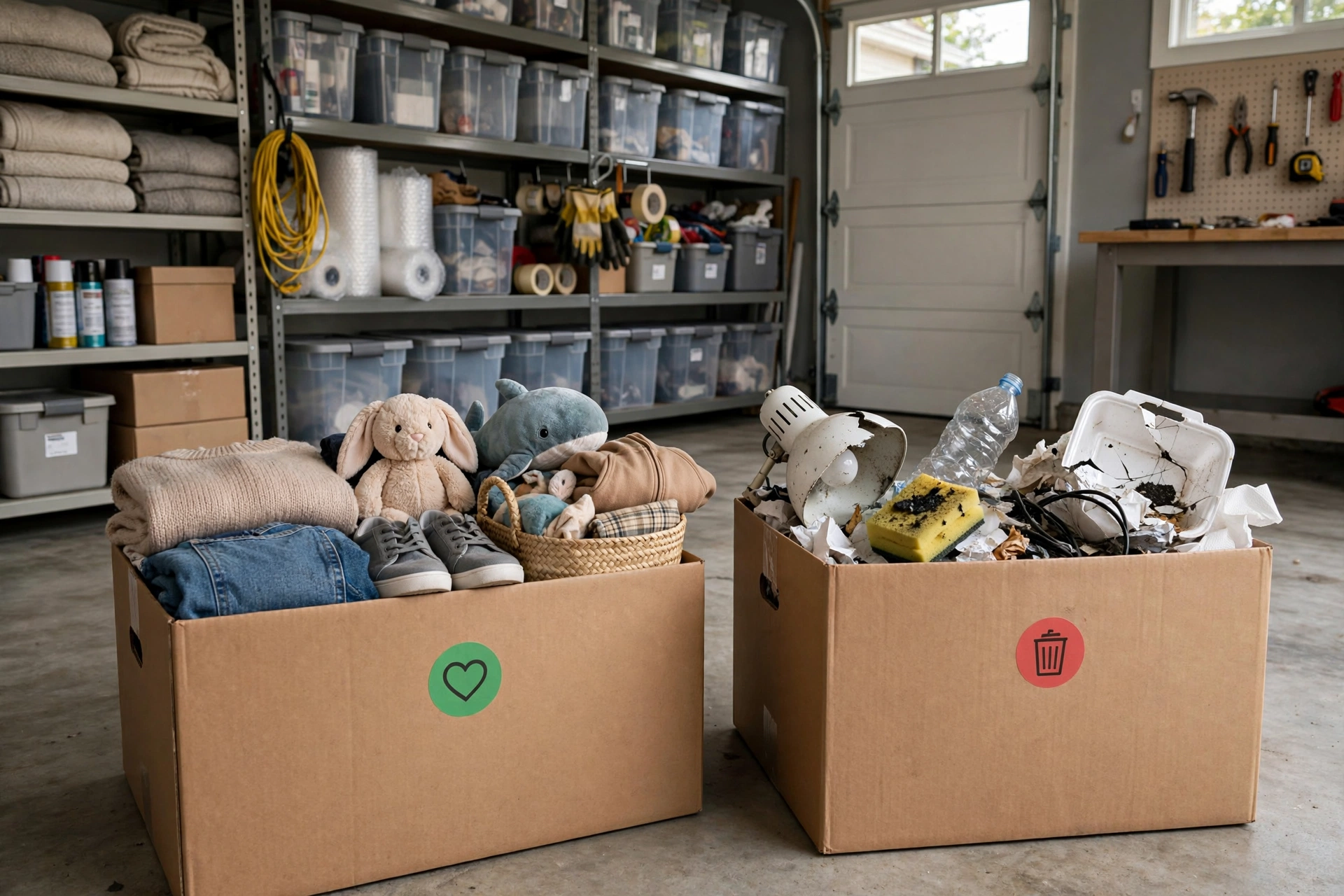
The single biggest lever on your price is how much you actually hand the crew. Pull out anything you can donate, sell, or recycle yourself. In Loveland and Larimer County, you have real options: usable household goods can go to thrift stores, and Larimer County runs a free household hazardous waste drop-off for residents, which takes paint, chemicals, and cleaners that a junk crew cannot haul anyway. Every bag you divert is truck space you do not pay for.
Send photos when you book
Most companies will give you a rough estimate from a few clear photos. It will not be the final price, the final price comes from the on-site look, but photos get you in the right tier and let you compare companies apples to apples. Take the photos in daylight, show the whole pile, and include anything awkward like stairs.
Get two or three quotes
Prices for the same pile can vary between companies, partly because crews estimate volume a little differently. Two companies can look at the same garage and land on different tiers. Getting a couple of written quotes costs you nothing and tells you what the local market actually charges for your job.
Consider curbside
If you can get the items to the curb or driveway yourself, ask about curbside pricing. The crew skips the in-house labor, and many companies pass the savings on. This works best for furniture and bagged items, not for a full cleanout where the sorting is the hard part.
Do not pay for air
Break down large hollow items before the crew arrives if you can do it safely. An assembled entertainment center fills a quarter truck by itself. Broken down, it might be an eighth. The crew charges for space, so give them less of it.
The Real Cost of Doing It Yourself
Before you call anyone, it is worth running the numbers on the DIY route, because it is not free. Renting a pickup truck or trailer for a day typically runs $20 to $100 depending on the vehicle and the rental shop, and then you still pay the dump fees. At the Larimer County landfill, a pickup truck load of loose waste carries a published flat fee, and per-item charges apply for appliances and mattresses. Add fuel, add the better part of a Saturday, and add the physical reality of hauling a sleeper sofa down the stairs yourself, and the DIY total often lands uncomfortably close to what a crew would have charged for a small job.
DIY makes sense in exactly one situation: you have a truck or trailer already, the load is small, and you have the time and the back for it. For anything bigger than a pickup bed, or anything involving stairs and heavy furniture, the crew usually wins on both money and misery. This is not a sales pitch. It is arithmetic most people only do after they have already spent the Saturday.
Loveland-Specific Factors That Affect Your Price
National averages get you in the ballpark, but a few local realities shape what you will actually pay around Loveland.
First, disposal runs through Larimer County's system. The county publishes its landfill fee schedule, and per-item charges for things like appliances with refrigerant ($36) and mattresses ($40) are baked into every local quote. A company hauling in Larimer County pays the same gate fees no matter whose truck it is, so quotes here will never dip below what disposal actually costs.
Second, access matters more than people think. Loveland neighborhoods range from flat suburban driveways to properties with long gravel drives and tight turns. If the truck cannot get close, the crew carries further, and the quote reflects it. Mention your driveway situation when you book so the estimate is honest.
Third, timing and weather play a role. Northern Colorado winters make outdoor loading slower and occasionally force rescheduling. Booking during a mild stretch, and having items staged in a garage or under cover, keeps the job on the faster end of the labor curve.
Finally, many Loveland-area HOAs have rules about how long items can sit at the curb and whether trailers or trucks can park overnight. If you are considering a dumpster instead of a crew, check your HOA rules first, because a violation notice wipes out any savings fast. (More on the dumpster question in our junk removal vs. dumpster rental comparison.)
Frequently Asked Questions
How much does junk removal cost in Loveland, CO?
There is no published Loveland-specific price list, but national industry averages put a minimum load at $75 to $140, a quarter truck at $125 to $200, a half truck at $200 to $400, and a full truckload at $600 to $800, with a typical job averaging around $240 to $246. Your actual price depends on volume, labor, item type, and local disposal fees. Always get a written on-site quote.
Do junk removal companies charge by weight or by volume?
Almost always by volume, meaning how much space your items fill in the truck. Weight matters indirectly because landfills charge by weight, and very heavy loads like concrete or dirt can be priced as dedicated loads. But for standard household junk, the quote follows the truckload fraction.
Is there a minimum charge?
Yes. Most companies have a minimum fee that covers the cost of sending a crew out, generally $75 to $140 nationally. If you only have one or two small items, the minimum still applies, so it pays to gather everything you want gone into a single pickup.
Why did two companies quote me different prices for the same pile?
Volume estimation is part science, part judgment. Two crews can look at the same pile and land on different truckload fractions. Companies also differ in labor rates, disposal costs, and overhead. This is normal, and it is exactly why getting two or three written quotes is worth your time.
Are disposal fees included in the quote?
At a reputable company, yes. The quote should cover labor, hauling, and disposal in one number. Always ask explicitly, because some less scrupulous operators quote the labor and add disposal fees later. If the answer is not a clear yes, keep shopping.
Can I negotiate the price?
You can ask, but volume pricing leaves little room. What actually lowers the price is lowering the volume: sort out donations, break down bulky items, and move what you can to the curb. Those steps do more for your bill than haggling ever will.
Do I need to be home during the pickup?
Not necessarily. Many companies offer curbside pickup where you leave items at the curb and the crew hauls them without you present, though you will usually pay in advance for that arrangement. For in-house removal, someone needs to be there to approve the written quote and confirm which items go.
Will the price change if I add items at the last minute?
It can, because more volume can push you into a higher truckload tier. A reputable crew will tell you before loading if the added items change the price, and you approve the new number first. If the pile shrinks instead, ask whether the price drops too. Fair companies adjust both ways.
References
- Angi. (2026). How much does junk removal cost in Chicago, IL? https://www.angi.com/articles/how-much-does-junk-removal-cost/il/chicago
- Junksmiths. (2026). Junk removal pricing (2026): Real cost guide. https://junksmiths.com/junk-removal-pricing/
- Larimer County. (n.d.). 2026 landfill fee schedule. https://www.larimer.gov/solidwaste/fees
- Larimer County. (n.d.). Household hazardous waste. https://www.larimer.gov/solidwaste/haz/household
- WeCycle. (2026). Junk removal cost in 2026: Full pricing guide. https://getwecycle.com/blogs/how-much-does-junk-removal-cost
Need a hand with the heavy stuff?
Junk Removal Loveland Co serves Loveland and Larimer County with a firm written price before anything loads. Call (970) 775-9477 for a free on-site quote.