Home / Blog / Garage Cleanout in Loveland, CO: The Complete Step-by-Step Guide
Garage Cleanout in Loveland, CO: The Complete Step-by-Step Guide
A complete garage cleanout guide for Loveland, CO: sorting, donations, what junk crews take, Larimer County disposal options, and a weekend timeline.
Every Garage Gets There Eventually
There is a moment in every homeowner's life when the garage stops being a place to park the car and becomes a storage unit you pay a mortgage on. It happens gradually. A broken lamp you will fix someday. Boxes from the last move that never got unpacked. The treadmill that became a clothing rack. Kids' bikes they outgrew three years ago. Then one day you open the garage door and realize you cannot find the rake, let alone park in there.
This guide walks through a complete garage cleanout for a Loveland home, step by step: how to sort, what a junk crew will and will not take, where donations and hazardous stuff go in Larimer County, and how to get it all done in a single weekend. Whether you finish it yourself or call in a crew for the heavy lifting, the process is the same.
Step 1: Plan Before You Touch Anything
The mistake most people make is starting to move things without a plan, which just rearranges the mess. Spend thirty minutes up front and the rest of the weekend goes twice as fast.
Pick your weekend and check the weather
You will be working with the garage door open and stuff staged in the driveway. In Loveland, that means checking the forecast. A calm, mild weekend is ideal. Northern Colorado wind will scatter anything light, and an afternoon thunderstorm will soak cardboard boxes you planned to donate. Have tarps ready regardless.
Gather supplies
You will need heavy-duty trash bags, a few large boxes or bins for sorting, a marker and tape for labeling, work gloves, a dolly or hand truck for heavy items, and a basic toolkit for disassembly. If you are renting a dumpster or booking a crew, arrange it before the weekend, not during. Crews and containers both book up, and a cleanout with nowhere for the junk to go stalls fast.
Decide your end goal
Be specific about what "done" looks like. "Clean the garage" is vague and expandable. "Park both cars in the garage and keep one wall of shelving" is a target you can measure. Write it down. When you are tired on Sunday afternoon and tempted to shove things back in, the written goal is what keeps you honest.
Step 2: Pull Everything Out
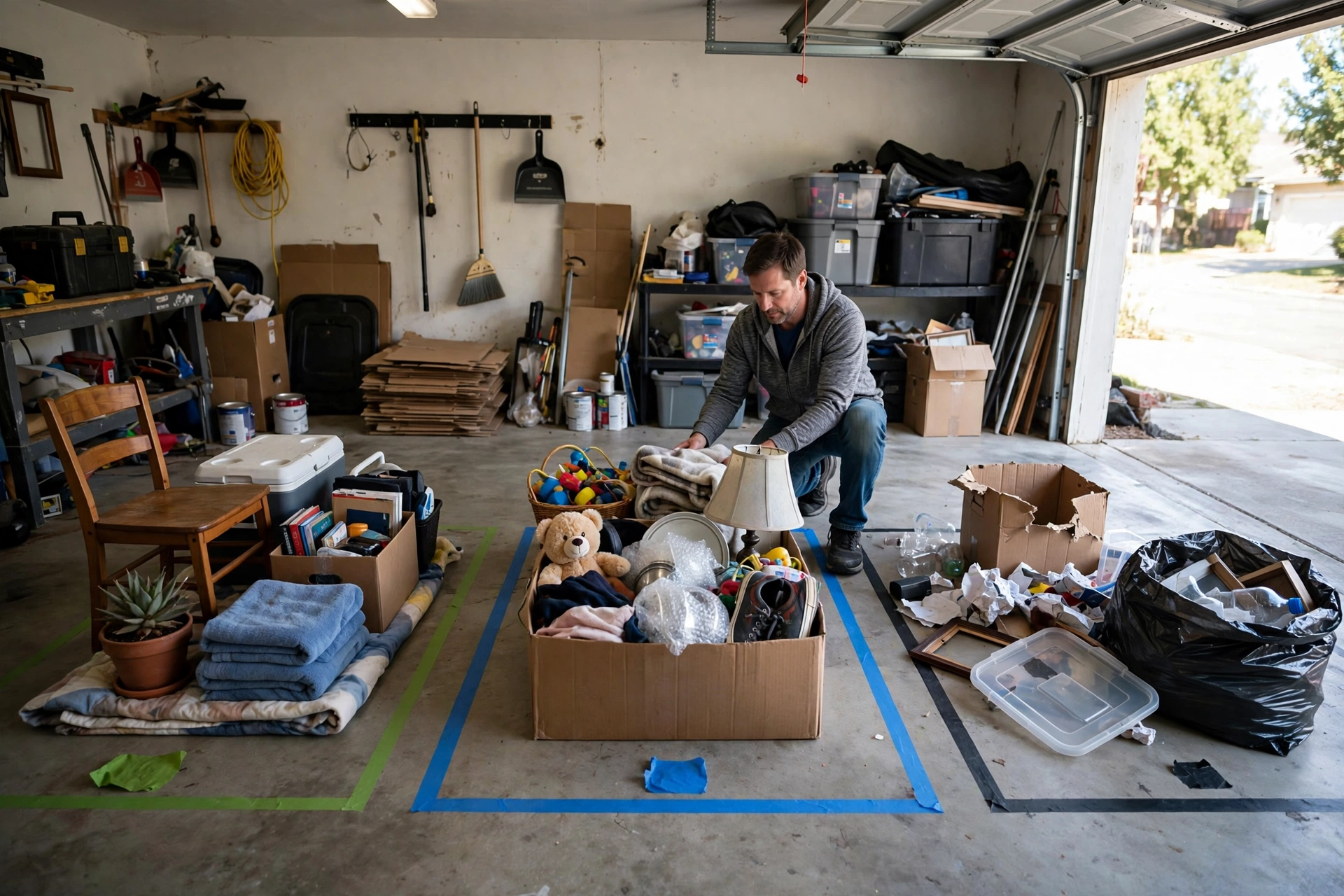
Yes, everything. Or at least everything you can safely move. The reason is simple: you cannot sort what you cannot see, and half the stuff in your garage is only still there because it was buried behind other stuff. Pull it all into the driveway in zones: one area for obvious trash, one for things you know you are keeping, and a big middle zone for decisions.
This is also when you sweep. Garages accumulate years of dust, dead insects, and mystery grime under the piles. With the floor clear, sweep it out and check for issues you could not see before: water stains near the door, cracked concrete, mouse droppings in the corners. A cleanout is the only time you will see the whole space, so use it.
Real talk: if pulling everything out feels overwhelming, do it in halves. Clear the left side Saturday morning, the right side Saturday afternoon. The principle is the same, just smaller.
Step 3: Sort Into Four Piles
Every item gets one of four verdicts. No fifth pile, no "maybe" box that lives in the garage for another year. The maybe box is how you got here.
Pile 1: Keep
Things you actually use: tools, sports gear in current rotation, seasonal decorations you put up every year, the emergency kit. Be strict. "I might need this" is not a use. If you have not touched it in two years and it has no seasonal or emergency purpose, it does not belong in the keep pile.
Pile 2: Donate or sell
Anything usable that you no longer need. Working tools, bikes the kids outgrew, furniture in decent shape, boxes of household goods. Donating is usually faster than selling, and for most garage items the resale value is not worth the listing hassle. But a riding mower, a good tool chest, or quality sports equipment can be worth selling. Decide quickly: if it is not worth photographing and listing today, donate it.
Pile 3: Recycle
Cardboard, scrap metal, old electronics, and anything your local recycling stream accepts. Metal is the standout here. Old grills, broken lawnmowers, scrap pipe, and metal shelving all have scrap value and should never go in the trash. Electronics need special handling, which we cover below.
Pile 4: Haul away
Broken furniture, worn-out mattresses, ruined carpet, busted plastic bins, and everything else that is genuinely trash but too big for the weekly cart. This is the pile a junk removal crew takes, or the pile that fills your rented dumpster.
A useful rule for the whole sort: handle each item once. Pick it up, decide, put it in its pile. The second-guessing loop, where you move the same lamp between piles three times, is what turns a one-day sort into a three-day ordeal.

Step 4: Know What a Junk Crew Will and Will Not Take
If you are hiring a crew for the haul-away pile, which most people do for anything involving furniture or heavy items, it helps to know the rules before they arrive. Junk removal companies take almost any non-hazardous household item: furniture, mattresses, appliances, electronics, exercise equipment, yard debris, renovation debris, and general clutter. If it is big, broken, and not dangerous, they can almost certainly haul it.
The exceptions are hazardous materials, and they are consistent across the industry. A standard junk truck cannot take wet paint, household chemicals, solvents, motor oil, gasoline, pesticides, propane tanks, asbestos, medical waste, or explosives. These fall under special disposal rules that a regular hauling truck is not equipped for. Customers should never hide hazardous items inside bags or furniture, because it creates safety risks for the crew and the disposal facility.
This is where Larimer County makes your life easier. The county runs a household hazardous waste facility that accepts paint, cleaners, gasoline, motor oil, pesticides, fluorescent bulbs, and similar materials from Larimer County residents for free. Usable products dropped off there are even offered back to the public through a free swap program. So your garage's shelf of ancient paint cans and half-empty chemical bottles has a proper destination that costs you nothing. Separate those items during your sort and plan a drop-off trip.
A few more special cases worth knowing:
- Electronics: Most junk crews take old TVs and computers and route them to e-waste recycling. The Larimer County landfill also accepts electronics for recycling at published per-pound rates.
- Appliances with refrigerant: Fridges, freezers, and air conditioners need the refrigerant recovered by a certified handler before disposal. Junk crews handle this routinely, and the county landfill charges a published $36 per freon-containing appliance, a cost baked into the quote.
- Mattresses: Crews take them, and the county charges a published $40 per mattress or box spring at the landfill, again reflected in your quote.
- Tires: Often carry separate disposal fees. Mention them when booking so they are in the quote.
Real talk: pull the hazardous stuff aside during your sort, not after the crew arrives. Finding paint cans buried in the load wastes everyone's time and can stall the whole pickup.
Step 5: Donations, Recycling, and the Landfill
Donations
For usable goods, thrift stores and charities are the fastest exit. National chains with Loveland-area presence accept furniture, household goods, and clothing, and some offer pickup for large items if you schedule ahead. Habitat for Humanity's ReStore takes usable building materials, tools, and furniture, which is perfect for the leftover lumber and hardware every garage seems to collect. Call ahead for large items, because donation centers sometimes pause furniture intake when their floors are full.
Recycling
Break down cardboard and put it in your curbside recycling. Scrap metal goes to a metal recycler, and many pay by weight, so a load of old grills and broken tools might earn you a few dollars instead of costing you. Electronics go to e-waste recycling, either through a junk crew that routes them properly or through county facilities.
The landfill run
For the true trash that fits in a truck or trailer, the Larimer County landfill is the destination. The county publishes its fee schedule: a pickup truck load of loose waste carries a flat fee, with per-item charges for appliances and mattresses as noted above. Cover your load with a tarp, because uncovered loads can draw extra fees. If you would rather not make the trip, this is exactly what a junk removal crew's quote includes.
Step 6: Prep for the Crew (or the Dumpster)
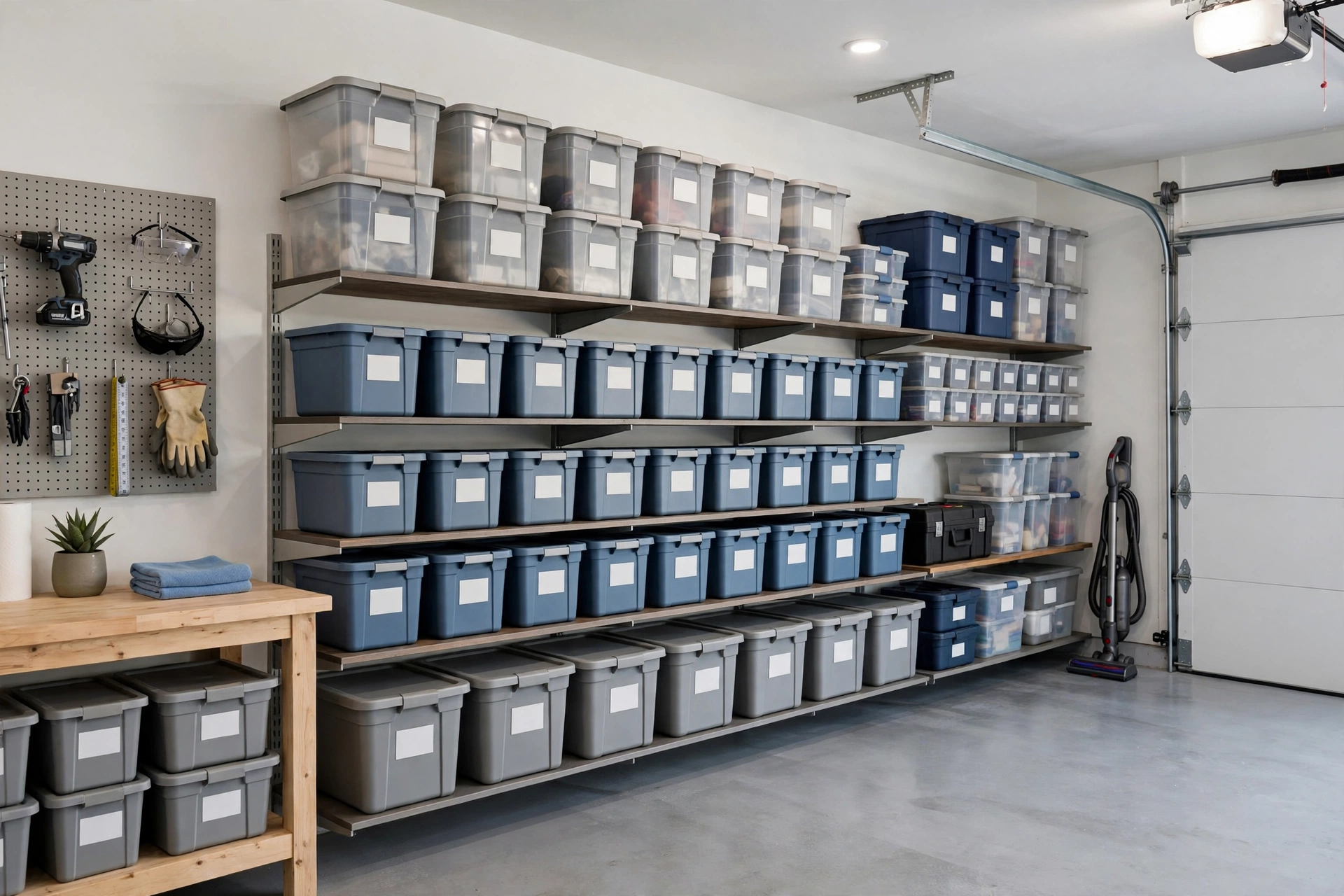
Whether you booked a junk removal crew or a roll-off dumpster, a little prep makes the pickup faster and cheaper.
- Consolidate the haul pile in one accessible spot, ideally the garage or driveway near where the truck will park. Crews price partly on labor, and a single carry path beats a scavenger hunt through the whole property.
- Disassemble what you safely can. Bed frames, shelving units, and entertainment centers take up far less truck space broken down. Crews charge by volume, so less air in the load means a lower tier.
- Bag the small stuff. Loose small items slow down loading. Bagged, they stack and move fast.
- Clear the path. Move cars, unlock gates, and make sure the route from pile to truck is clear. Mention stairs, narrow hallways, or long carries when you book so the quote is accurate.
- Take photos of the final pile and send them ahead. The crew arrives with the right truck and the right expectations, and the on-site quote goes faster.
- Separate the special items. Hazardous waste goes to the county drop-off, not the crew. Tires, appliances, and anything unusually heavy should be flagged in advance.
If you went the dumpster route instead, the prep is similar, minus the crew: stage everything near the container, break down bulky items so they pack tight, and keep prohibited items out. Our junk removal vs. dumpster rental guide walks through which option fits which job.
The Weekend Timeline
Here is how a typical garage cleanout weekend breaks down. Adjust to your stamina and your pile.
Friday evening (1 to 2 hours)
Gather supplies, check the weather, confirm your crew booking or dumpster delivery, and set your written end goal. Move cars out of the driveway so Saturday starts clean.
Saturday morning (3 to 4 hours)
Pull everything out and sweep. This is the most physical block of the weekend, so do it first while you are fresh. Set up your four sorting zones in the driveway as you go.
Saturday afternoon (3 to 4 hours)
Sort. Handle each item once, four piles, no maybes. Load donations into the car for a drop-off run. Bag the small trash. By evening, the driveway should show four distinct piles and a swept garage.
Sunday morning (2 to 3 hours)
Run donations and recycling. Drop hazardous items at the county facility. Consolidate the haul-away pile near the curb or driveway.
Sunday afternoon
Crew pickup, dumpster loading, or landfill run. Then put back only what earned its place in the keep pile, ideally onto shelves and wall hooks rather than the floor. Stand in the empty-ish garage and enjoy it. You earned that part.
When to Call the Pros Instead of DIYing
A garage cleanout is very DIY-able right up until it is not. Call a junk removal crew when any of these are true:
- Heavy furniture or appliances are involved. Sleeper sofas, old refrigerators, treadmills, and tool chests are two-person jobs with injury potential. Crews do this daily with the right equipment.
- Disassembly is needed. Hot tubs, sheds, and built-in shelving need tools and know-how. A crew that does hot tub removal or shed removal regularly will finish in a fraction of the time.
- The volume exceeds your vehicle. If the haul pile is bigger than a pickup bed, you are looking at multiple landfill trips. One crew visit replaces all of them.
- Time is the constraint. A crew clears in about an hour what takes a homeowner a full weekend. If your weekend is worth more than the quote, the math is simple.
- It is an estate or hoarding situation. Larger cleanouts, like estate cleanouts or multi-room clearouts, benefit from a crew's sorting speed and truck capacity. These jobs have their own dynamics, and experience matters.
For standard mixed garage junk, a crew's half-truckload tier, nationally $200 to $400, covers most two-car garages. Our cost guide breaks down the pricing tiers in detail.
Tricky Items and Where They Actually Go
Every garage has a few items that do not fit neatly into the four piles. Here is where the common problem children go:
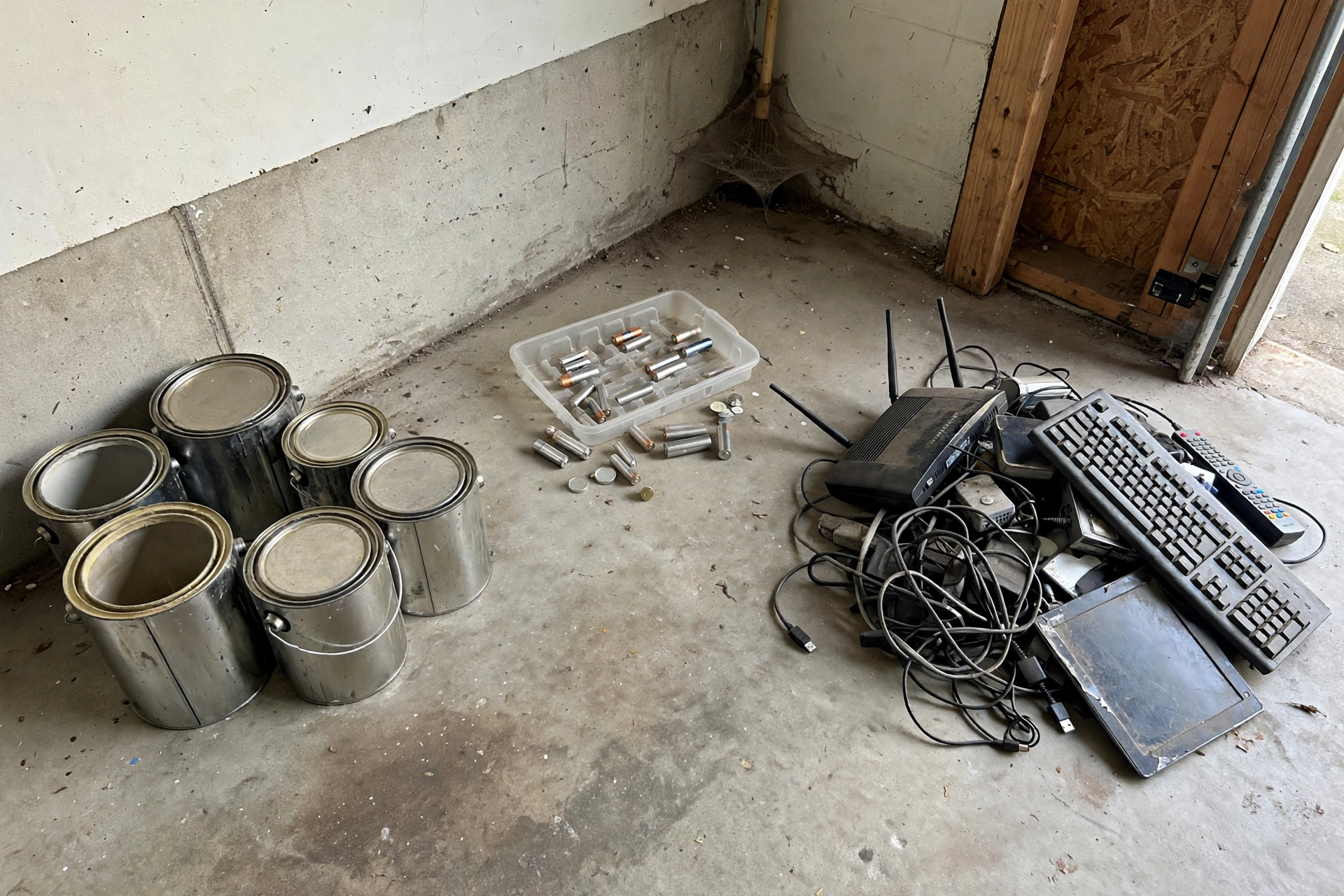
- Old gasoline and mixed fuel: Hazardous. Take it to the Larimer County household hazardous waste facility in a sealed, labeled container. Never pour it on the ground or into a drain.
- Car batteries: Most auto parts stores take old lead-acid batteries for recycling, often with a small core credit. Do not put them in the trash.
- Used motor oil and antifreeze: Also hazardous waste facility material. Many auto parts stores also accept used motor oil for recycling.
- Dried-out latex paint cans: Once paint is completely dry, empty cans with the lids off can usually go in the regular trash. Wet paint of any kind goes to the hazardous waste facility.
- Propane tanks: Grill-size tanks are accepted at the county hazardous waste facility. Larger tanks need a propane dealer or scrap facility. A junk crew cannot take pressurized tanks.
- Old tires: Tires carry separate disposal fees almost everywhere. Tire shops often take old tires for a small fee when you buy new ones. Mention tires when booking a junk crew so any surcharge is in the quote.
- Broken concrete and bricks: Extremely heavy. Landfills charge by weight for rubble, so a small amount of concrete can cost more to dump than a truck of furniture. Some crews price heavy materials as dedicated loads. Ask upfront.
- Fluorescent tubes: Contain mercury. The county hazardous waste facility takes them, bundled without tape. Regular incandescent and LED bulbs can go in the trash.
When in doubt about any item, the county's hazardous waste page lists exactly what is accepted and what is not. Checking takes two minutes and beats guessing.
Keeping It Clean Afterward
The cleanout is the hard part. Staying clean is the system. A few habits that actually work:
- One in, one out. Every new item that enters the garage means an old one leaves. This single rule prevents most re-clutter.
- Everything gets a home. Wall hooks for tools, shelves for bins, labeled zones for sports gear. Items without a designated spot migrate to the floor, and the floor is how garages die.
- The annual sweep. Once a year, walk the garage with a trash bag and a donation box. Twenty minutes beats another full weekend.
- Break down boxes immediately. Cardboard boxes are the kudzu of garages. Flatten them the day they arrive or they will colonize a corner.
Frequently Asked Questions
How long does a garage cleanout take?
For a typical two-car garage, plan one full weekend: a day for pulling out and sorting, and a day for donations, disposal, and putting back. A junk removal crew can handle the haul-away portion in about an hour once you have sorted. Heavily packed garages or estate situations can take longer.
How much does it cost to have a garage cleaned out in Loveland?
There is no published Loveland-specific price, but national averages put a half-truckload, which covers most garage cleanouts, at $200 to $400. Larger garages needing a full truckload run $600 to $800. The final price depends on volume, labor like stairs and disassembly, and local disposal fees. See our cost guide for the full breakdown.
What should I do with old paint and chemicals from my garage?
Do not put them in the trash or hand them to a junk crew. Larimer County accepts household hazardous waste, including paint, cleaners, gasoline, motor oil, and pesticides, from county residents for free at its hazardous waste facility. Separate these items during your sort and plan a drop-off trip.
Can a junk removal company take everything from my garage?
Almost everything non-hazardous: furniture, appliances, mattresses, electronics, tools, yard equipment, and general clutter. They cannot take hazardous materials like wet paint, chemicals, fuels, or propane tanks. Those go to the county's free hazardous waste drop-off.
Should I donate or try to sell usable items?
Donate unless an item is genuinely valuable. The time spent photographing, listing, and meeting buyers for a $20 item is rarely worth it. Items like riding mowers, quality tool chests, or good sports equipment can be worth selling. Everything else, donate it and take the tax receipt.
How do I keep the garage from filling up again?
One in, one out. Give every item a designated spot on a shelf or hook rather than the floor. Do a twenty-minute sweep once a year with a trash bag and a donation box. And break down cardboard boxes the day they arrive.
References
- Angi. (2026). How much does junk removal cost in Chicago, IL? https://www.angi.com/articles/how-much-does-junk-removal-cost/il/chicago
- CW Junk Help. (n.d.). What items can a junk removal company take? https://cwjunk.com/what-items-can-a-junk-removal-company-take/
- Junksmiths. (2026). Junk removal pricing (2026): Real cost guide. https://junksmiths.com/junk-removal-pricing/
- Larimer County. (n.d.). 2026 landfill fee schedule. https://www.larimer.gov/solidwaste/fees
- Larimer County. (n.d.). Household hazardous waste. https://www.larimer.gov/solidwaste/haz/household
- The Junkluggers. (2026). What junk removal companies won't take. https://www.junkluggers.com/fairfield-and-westchester-counties/about-us/blog/what-junk-removal-companies-wont-take/
Need a hand with the heavy stuff?
Junk Removal Loveland Co serves Loveland and Larimer County with a firm written price before anything loads. Call (970) 775-9477 for a free on-site quote.